Choosing a new electricity supplier is a business decision, but it can quickly feel like a paperwork project.
There is eligibility to confirm. Electricity bills and demand data to review. Different pricing structures to compare: contracts, metering requirements, and documents to coordinate.
Once the switch is complete, you still have bills to understand, consumption patterns to watch, and questions that may come up along the way.
For businesses considering a retail electricity supplier in the Philippines, the quality of the support around the plan can matter almost as much as the plan itself.
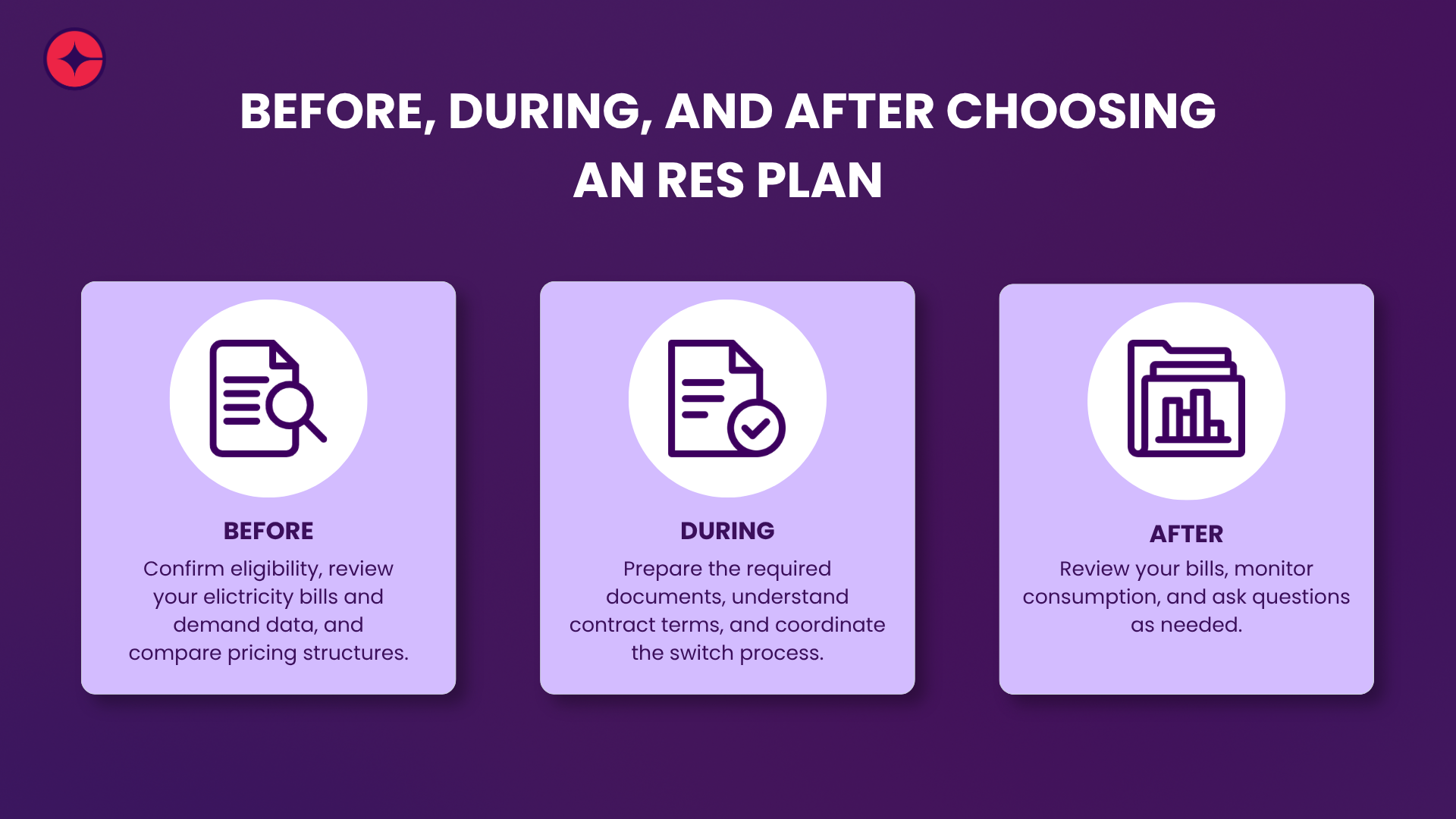
That is where COREnergy takes a more hands-on approach. Instead of treating the relationship as a transaction that begins with a quotation and ends with a signed contract, COREnergy supports businesses before, during, and after the switch.
The first question should not be, “What is your cheapest rate?”
A more useful question is: What electricity arrangement makes sense for the way your business actually operates?
That starts with eligibility. Since June 26, 2026, the Energy Regulatory Commission has lowered the eligibility threshold for Retail Competition and Open Access (RCOA) and the Retail Aggregation Program (RAP) to an average monthly peak demand of at least 100 kW.
This has opened supplier choice to more medium-sized commercial establishments, offices, hotels, schools, hospitals, manufacturing facilities, and other electricity users.
But seeing a demand figure on your bill is only the beginning. COREnergy can help businesses review their demand history, understand whether they qualify, and identify whether they should participate individually or explore aggregation where applicable.
This is particularly helpful for companies researching how to switch retail electricity suppliers in the Philippines for the first time. Electricity-market terminology can be unfamiliar, and eligibility should be explained in plain language before a business starts comparing contracts.
Once eligibility is clear, the conversation shifts from Can we choose? to What should we choose?
Not every company uses electricity in the same way. A factory running several shifts may have a relatively predictable load. A commercial building may consume most heavily during daytime office hours.
A business with flexible operating schedules may be able to move some consumption to different periods. Others simply want greater certainty in monthly electricity costs.
COREnergy reviews factors such as consumption patterns, operating hours, load profile, budget priorities, and appetite for market-price risk when discussing plan options.
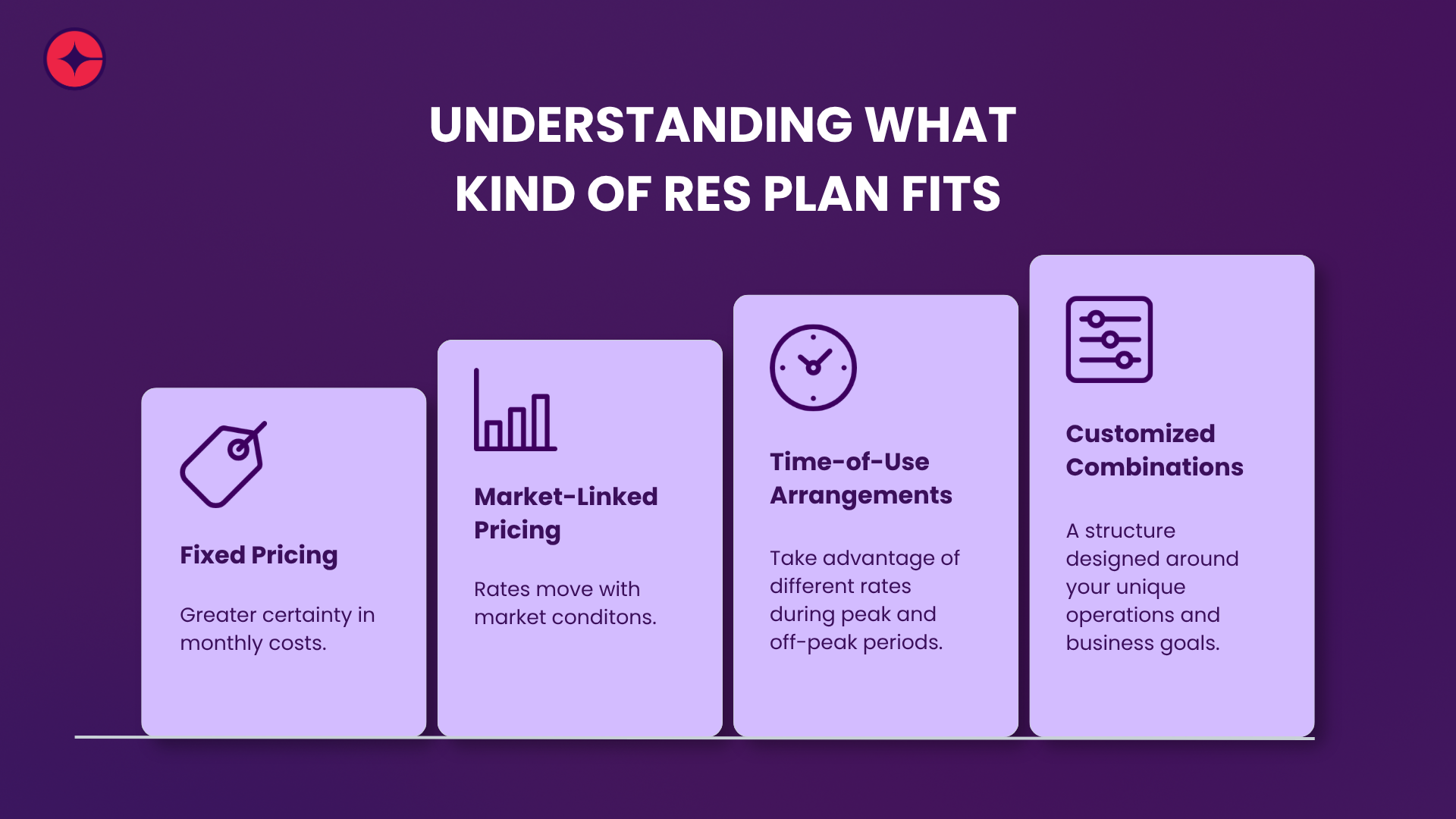
Depending on those needs, businesses may consider structures such as fixed pricing, market-linked pricing, time-of-use arrangements, or customized combinations.
That is an important distinction when choosing a retail electricity supplier. Comparing electricity suppliers purely on one advertised peso-per-kWh figure can miss how the contract actually behaves.
A good plan is not simply the one with an attractive number on the proposal. It is one whose pricing structure makes sense for your operations.
COREnergy's own plan-selection guidance emphasizes looking at consumption data and business requirements before determining which structure may fit.
This is often the part businesses hesitate about. Switching under RCOA involves more than telling one supplier you are leaving and another that you are joining.
There are formal requirements involving the customer, the Retail Electricity Supplier, the Distribution Utility or other network service provider, metering arrangements, and the Central Registration Body.
IEMOP serves as the Central Registration Body for RCOA and maintains retail-market registration information, forms, and related requirements.
For a business, that can mean gathering corporate documents, electricity bills, authorized-signatory information, financial requirements, and the necessary agreements for the switch.
This is where guided assistance becomes valuable. COREnergy helps customers identify what is required, prepare applicable forms and templates, coordinate switching milestones, and work through the submission process.
Rather than handing a customer a checklist and leaving the rest to their finance or facilities team, the objective is to keep responsibilities and deadlines clear.
COREnergy describes its switching approach simply: the customer provides the necessary business information, while its team assists with the paperwork and provider coordination.
That support is especially useful when several people inside the customer organization are involved. Finance may handle billing and security requirements.
Administration may gather corporate documents. Facilities may coordinate metering. Management may review the commercial contract. Someone needs to keep the moving pieces connected.
A good switching experience also depends on knowing what happens next. Customers should understand their target switch date, which agreements still need signatures, whether metering work is required, what needs to be settled with their Distribution Utility, and when their new supply arrangement takes effect.
The formal switch request is only one part of the timeline. Businesses entering RCOA also need to account for advance notification and preparation requirements.
COREnergy's current switching guidance notes that customers should plan well ahead of their intended switch date rather than waiting until the final billing cycle.
That planning helps turn what can look like a complicated process into a sequence of manageable steps. More importantly, switching electricity suppliers in the Philippines does not mean replacing the physical distribution network serving your facility.
Your local Distribution Utility continues to deliver electricity through its lines. What changes is your retail supply arrangement and the commercial relationship governing the electricity you purchase. For operations teams, that is often one of the most reassuring things to understand early.
Signing the Retail Supply Contract should not be the last meaningful conversation you have with your energy provider.
Electricity remains a significant operating expense. Bills still need to be reviewed. Consumption changes. Facilities expand. Equipment is added. A company may open another branch or discover that its operating schedule looks very different from when the original contract was signed.
Ongoing account support gives businesses somewhere to take those questions. COREnergy's approach includes customer service around the electricity account as well as tools and engineering services that can provide more visibility into energy use.
Its MyPower Platform, for example, is designed to help customers monitor consumption and identify patterns. Supporting services include power-quality studies, thermal scanning, medium-voltage equipment testing, and Energy Audit Levels 1, 2, and 3.
An energy audit is separate from the actual switching process, but it can be useful for companies that want to go beyond securing an electricity plan and understand how power is being consumed inside their operations.
That creates a broader conversation: not just “what are we paying for electricity?” but whether we're using it as effectively as we could.
There are many considerations when comparing energy companies in the Philippines and power companies in the Philippines.
Price matters. Contract structure matters. But so does what happens when you need help. Can the supplier explain your options without burying you in industry language? Will someone help your team understand the requirements?
Is there support during onboarding? When a billing or consumption question appears six months later, is there someone you can actually talk to?
For businesses buying electricity for business, these are practical questions, not extras. COREnergy Philippines is built around making supplier choice more approachable: helping businesses establish eligibility, understand their options, navigate documentation and onboarding, and continue managing their energy after the switch.
Choosing a RES should give your business more control, not another complicated process to manage. Thinking about making the switch? Start with a conversation.
COREnergy can help you review your eligibility, understand your electricity options, and find a plan that works for the way your business operates.