
Switching under Retail Competition and Open Access (RCOA Philippines) is often described as “changing your electricity supplier.” That is true, but it can also be misleading. In real life, three parties stay actively involved even after you switch:
Understanding who handles what matters for two reasons. First, it prevents delays and surprises during onboarding. Second, it keeps expectations clear after the switch, especially when billing, metering, and coordination questions come up.
This guide breaks down responsibilities in plain language so you can brief your finance team, facilities team, and leadership with confidence.
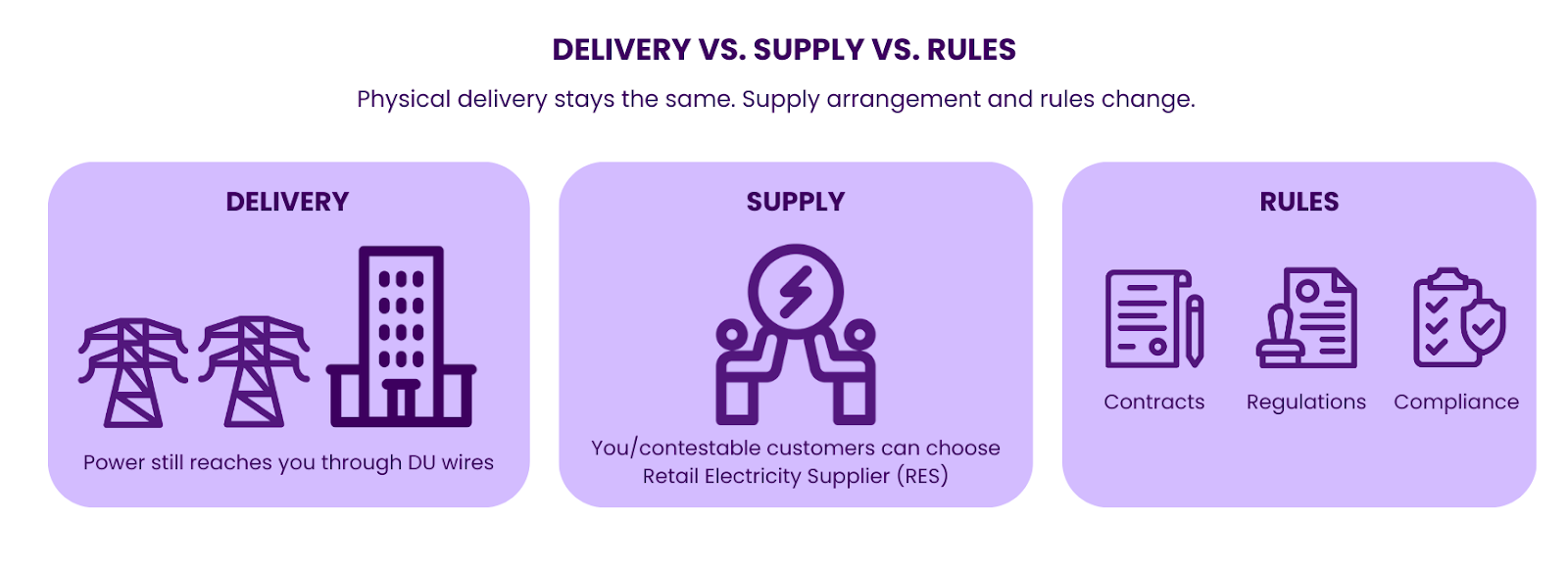
Under RCOA, the physical delivery of electricity does not change. Power still reaches your site through the same DU network. What changes is the supply arrangement: a contestable customer can choose a Retail Electricity Supplier voluntarily.
Behind the scenes, market institutions also support the system. For example, IEMOP serves as the Central Registration Body for RCOA to facilitate registration, customer switching, and information exchange.
1) Confirming eligibility and readiness
Many DUs publish general guidance on contestability and qualification phases. Ultimately, eligibility is governed by the rules and thresholds set by regulators, but as a practical step, you start by validating whether your facility qualifies and what documents you will need.
2) Knowing your load profile and operating reality
Supplier selection is not only about price. Your usage pattern matters, especially peak behavior, seasonality, and operational constraints. This is the foundation for evaluating commercial energy solutions that actually fit your business.
3) Preparing internal alignment
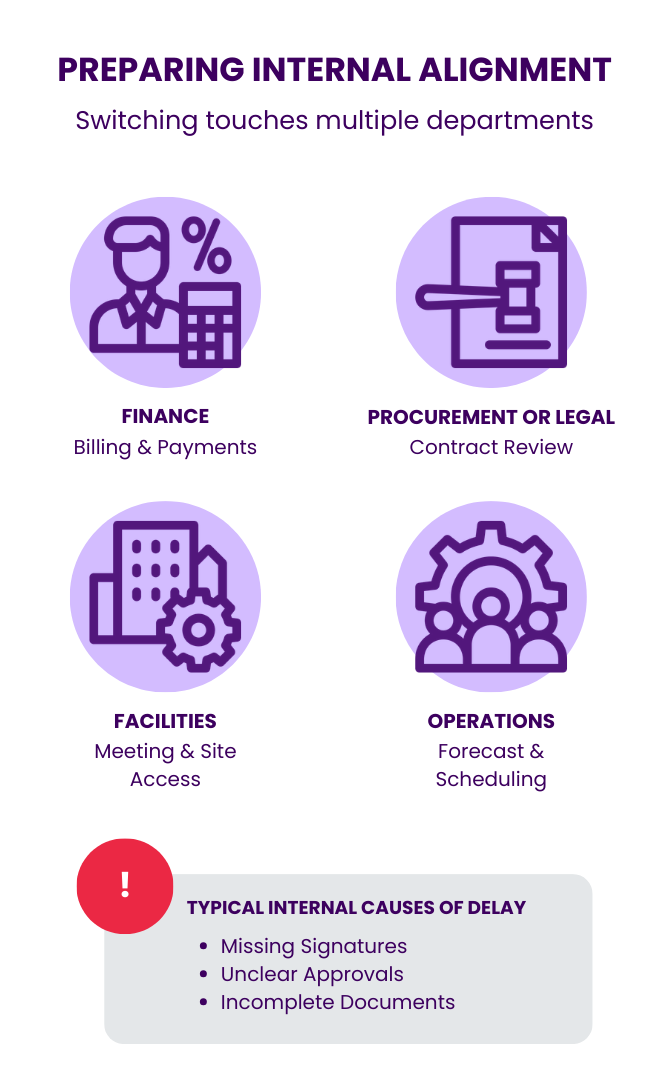
Switching touches multiple stakeholders:
A common cause of switching delays is not technical. It is internal, like missing signatories, unclear approvals, or incomplete documents.
1) Providing required documents and authorizations
Your RES and DU will request specific information to support registration and switching. Responding quickly keeps timelines on track.
2) Coordinating site access if needed
If metering work or verification is required, your team must enable access and designate a point person.
1) Following the agreed payment and process flow
Once your retail supply contract is active, your business is responsible for timely payment, accurate internal allocation, and communicating operational changes that affect demand.
2) Monitoring consumption and raising issues early
If you see unusual consumption patterns or billing questions, flag them early. A responsive RES can help explain the drivers and coordinate clarifications when needed.
A DU remains essential even after you switch to a retail electricity supplier, because the DU still owns and operates the distribution lines and delivers power to your meter.
1) Confirming your customer status and providing relevant data
Many DUs provide guidance on contestability proofs and the general steps to shift to retail competition, including the importance of understanding your needs and load profile.
2) Metering and technical requirements
The DU is the party associated with local distribution metering arrangements and network requirements. If a metering configuration needs to be verified or updated to support the contestable setup, the DU will be involved.
1) Maintaining uninterrupted delivery
Switching suppliers should not mean switching wires. The DU continues delivering electricity as the transition happens.
2) Participating in the switching workflow as required
RCOA customer switching requires information exchange among participants, with IEMOP facilitating registration and switching as the CRB. Your DU participates in the broader retail market processes as applicable.
1) Operating and maintaining the distribution network
Outages, line maintenance, and local network issues remain within the DU’s scope.
2) Implementing distribution-related services tied to the connection
Your DU relationship remains active through your ongoing connection arrangement. That is why most businesses treat the switch as a change in supply contract, not a change in local utility delivery.
Your RES is the party you choose and contract with for retail supply. Under RCOA, qualified end users can choose their RES voluntarily. The DOE also emphasizes the importance of suppliers meeting obligations and demonstrating capability and transparency in the transition to RCOA.
1) Designing your supply offer and explaining the structure
A good RES does not just quote a number. They explain what drives cost, what is fixed vs variable, and how risk is handled.
2) Guiding you through requirements and timelines
The DOE circular on transition toward RCOA addresses obligations of industry participants and points to the importance of focal persons and compliance in implementation. In practice, your RES should provide a clear switching checklist and lead coordination steps.
3) Helping you evaluate fit, not just price
If your goal is lower electricity costs, the best outcome comes from matching contract structure to your operations, not forcing your operations to chase a contract structure.
1) Registration and switching support
IEMOP serves as the Central Registration Body for RCOA to facilitate registration, customer switching, and exchange of needed information among participants. Your RES typically guides the process, so your team does not need to memorize every procedural detail.
2) Stakeholder coordination
Your RES coordinates with the DU and other retail market participants for required confirmations and data flow, while keeping you informed.
1) Ongoing account management and customer support
This is where the best RES partners stand out. Beyond contracting, you need responsiveness, billing clarity, and proactive guidance.
2) Billing clarity and transparency
The goal is not only to send a bill. It is to make sure you can understand the drivers, forecast better, and make smarter decisions month to month.
If you need a quick way to align teams, here is the simplest breakdown.
Customer handles
DU handles
RES handles
Switching under RCOA should feel structured, not stressful. The right Retail Electricity Supplier makes the process easier by being transparent about requirements, responsive in coordination, and clear in billing and account support.
If your business is exploring RES and wants a partner that guides your team end-to-end, COREnergy can help you assess eligibility, evaluate options, and manage the switching workflow with less internal workload. When you are ready, we can also walk you through what to expect after the switch so the benefits are sustained, not just felt in the first billing cycle.