When businesses compare electricity suppliers, the first question is usually predictable: “What rate can you offer us?” Fair question.
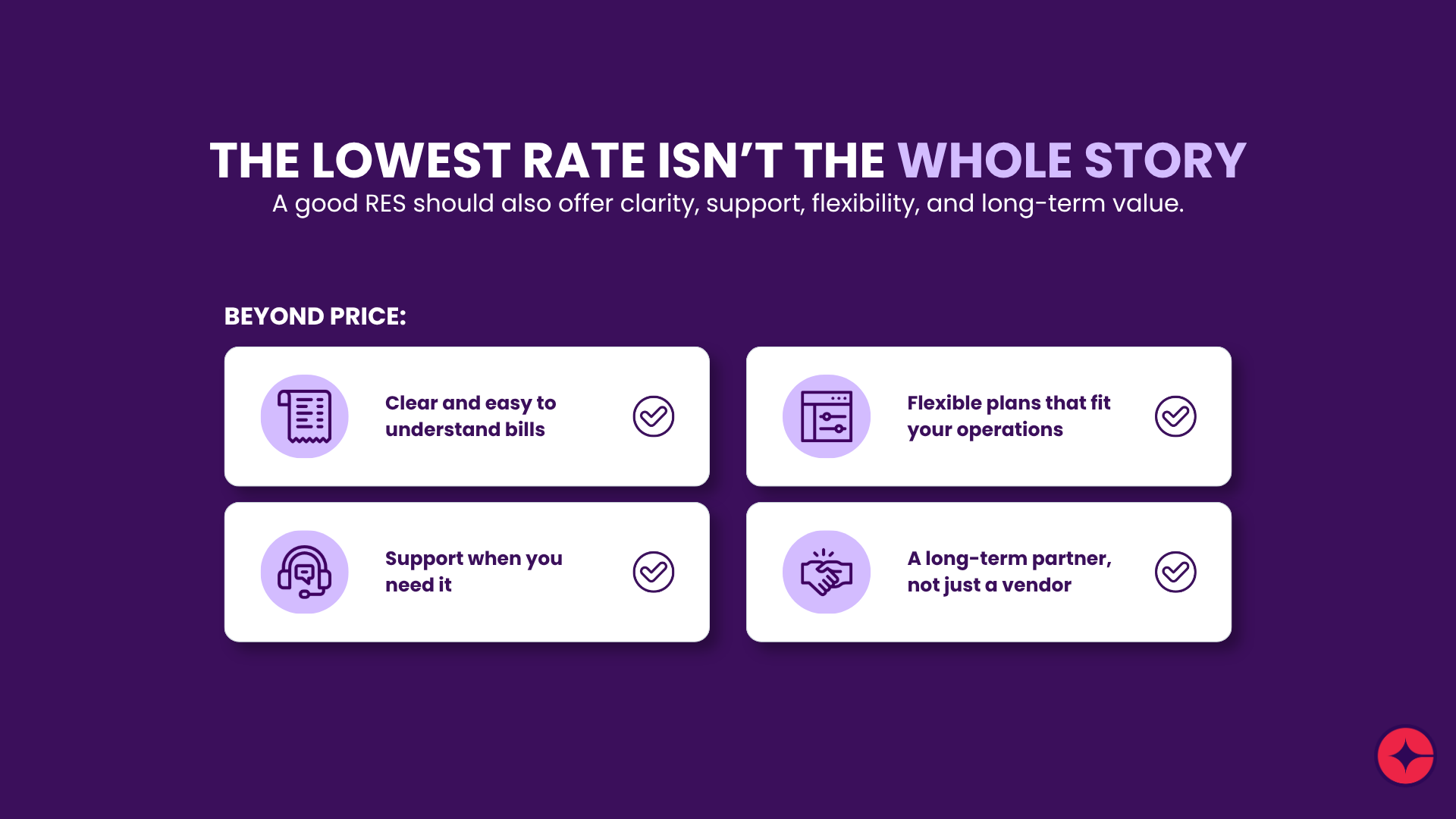
Electricity is a major operating expense for many commercial and industrial businesses, so getting a competitive rate matters. But when you are choosing a retail electricity supplier, the cheapest-looking offer on a spreadsheet should not be the only thing guiding the decision.
Your relationship with a supplier can last for years. During that time, you may need help understanding a bill, reviewing consumption, changing operational plans, resolving an issue, preparing for contract renewal, or navigating market requirements.
That is when the difference between an electricity vendor and a genuine energy partner becomes much clearer.
If you are comparing retail electricity suppliers in the Philippines, here are the things worth looking for beyond the rate itself.
It sounds simple, but responsiveness matters. When everything is running normally, you may barely need to speak with your electricity supplier. But when you do have a question, the quality of support becomes very noticeable very quickly.
Maybe your monthly bill looks different from what you expected. Perhaps Finance needs clarification on a charge.
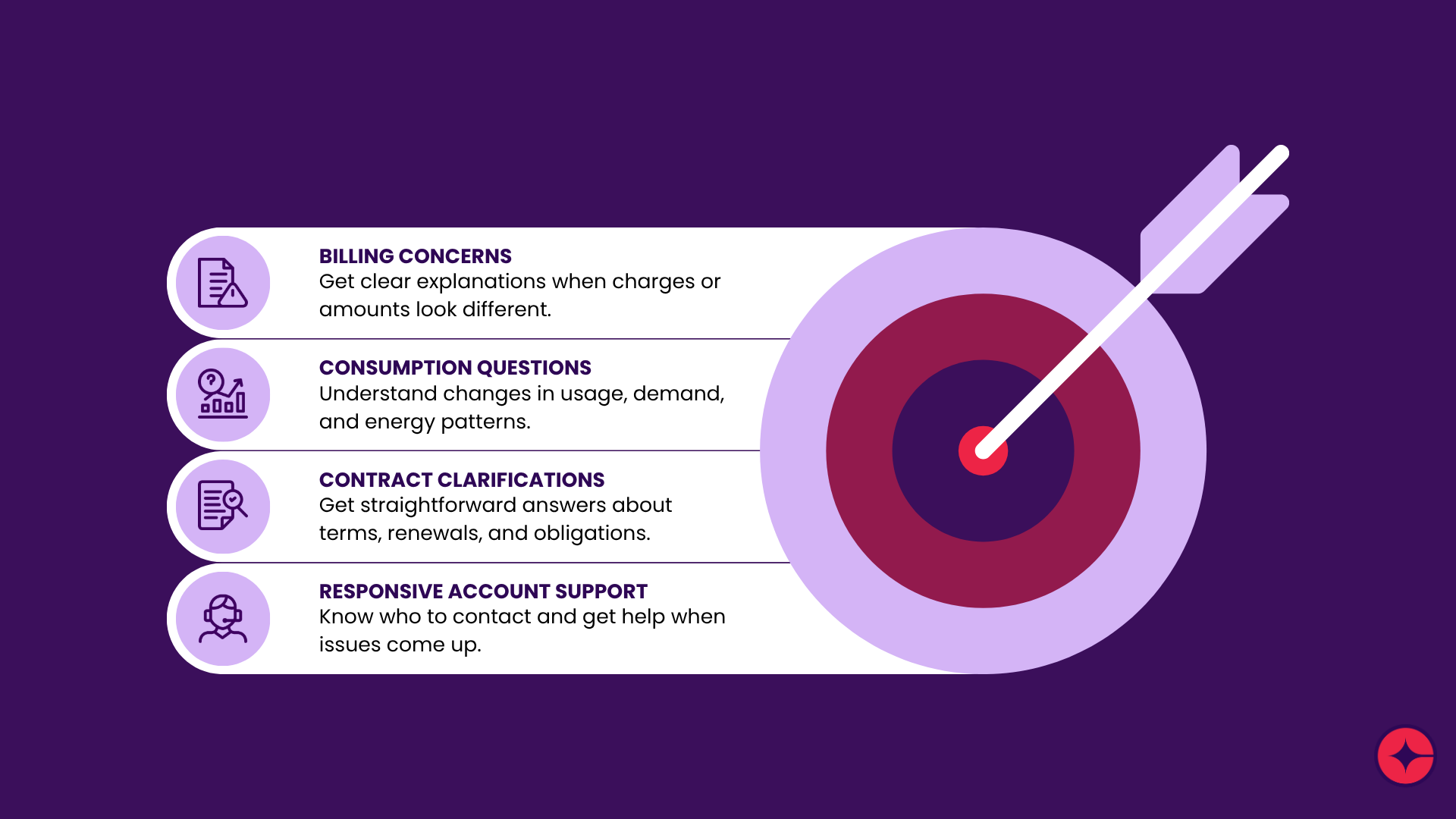
Your operations team may have questions about consumption data. Management may want to understand what happens when the contract expires. Those questions should not disappear into an inbox.
Customer service is important enough that the Energy Regulatory Commission has moved to strengthen frontline customer services across distribution utilities and retail suppliers, including Consumer Welfare Desks where customers can raise concerns.
A strong energy provider should go further than simply meeting a minimum requirement. You should know who handles your account, how to reach them, and what to expect when you need support. Good service often becomes most valuable precisely when something is not going according to plan.
Electricity billing is technical by nature. That does not mean it should be impossible to explain.
A good supplier should help your team understand how your monthly charges relate to your contract and electricity consumption. If something changes, there should be a reasonable explanation behind it.
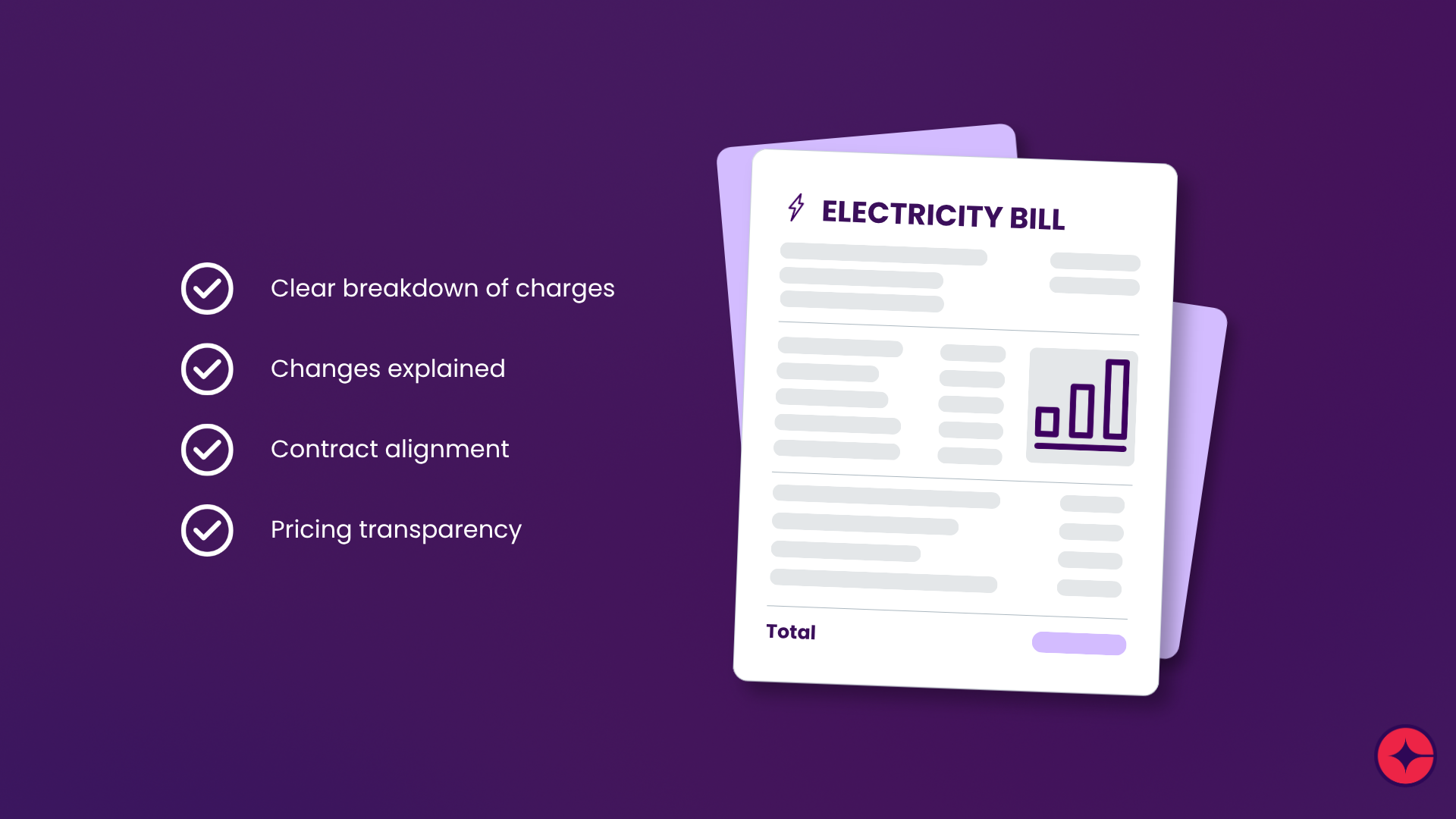
This becomes particularly important when comparing different pricing structures. Is the quoted rate fixed? Are some components variable? Which charges can change? What happens if market prices move? Are there other provisions that could influence the final amount paid?
These questions matter because the lowest number at the top of a proposal may not always translate into the lowest or most predictable cost over the life of the contract.
You should be able to understand the commercial arrangement before signing it—not slowly discover how it works through future bills.
An attractive proposal is one thing; a good contract is another. Before signing with any of the electricity suppliers you are considering, look beyond the headline rate and examine the actual terms.
How long is the contract? What are the renewal conditions? How much notice must you provide if you decide not to renew? Are there minimum consumption commitments? Which charges are passed through? What happens if your demand or consumption changes? How are price adjustments handled?
The ERC maintains standard retail-market documentation, including a pro forma Retail Supply Contract, as part of its regulatory framework for retail suppliers.
That does not mean every commercial offer will look identical. It does mean the relationship is governed by more than the number attached to every kilowatt-hour. A good RES should be willing to walk you through those terms before you sign.
Your monthly bill tells you what you owe. Useful reporting should tell you more.
How much electricity are you consuming? When does demand rise? Has usage increased compared with previous months? Are certain facilities behaving differently? Has your consumption profile changed as the business has grown?
These details can help management make better operational and financial decisions. A supplier that provides visibility into electricity usage can help move the conversation from “How much is our bill?” to “Why are we using electricity this way, and can we manage it better?” That is a much more useful conversation.
Depending on the facility, deeper investigation may eventually involve an energy audit or other technical assessment to understand where energy is being consumed and where improvements may be possible.
The supplier does not need to turn every customer into an energy expert, but it should make the information easier to use.
There is no single electricity arrangement that works equally well for every business.
A manufacturer operating 24 hours a day has a different load profile from an office building. A supermarket with refrigeration running continuously behaves differently from a business whose demand falls sharply after 6:00 PM.
Even two companies in the same industry may have different priorities. One may prioritize budget certainty. Another may be comfortable with more price movement if there is an opportunity to save. Another may want a structure designed around predictable operating hours.
That is why a good RES should ask questions before recommending a plan. It should look at your consumption patterns, operating schedule, demand characteristics, risk appetite, and business goals.
RCOA was created to allow qualified end-users to choose their RES voluntarily, giving businesses an opportunity to select an arrangement that better suits their electricity requirements. IEMOP serves as the Central Registration Body and facilitates registration and customer switching in the retail market.
Choice becomes much more valuable when suppliers actually use that flexibility to understand the customer.
Finding a better offer is only part of switching electricity suppliers in the Philippines. There is also a process behind the switch.
Retail customers may need to coordinate requirements involving their supplier, distribution utility, metering arrangements, registration, and supporting documents. IEMOP publishes the official procedures and templates used for retail customer switching under RCOA and related customer-choice programs.
A good supplier should not simply hand you a checklist and wish you luck. It should tell you what is required, explain which documents your business needs to provide, help coordinate the next steps, and keep the process moving.
For a business already juggling operations, finance, procurement, and compliance, that support can make a big difference. The ideal switching experience should feel managed rather than improvised.
The relationship should not end when the deal closes. Your business may expand, operating hours may change, a new production line may be introduced, or facilities may be added. Your electricity consumption could become more or less predictable. Market conditions can change as well.
A good electricity partner should be able to revisit the conversation as those circumstances evolve. That could mean reviewing consumption data, discussing a different rate structure at renewal, identifying unusual usage, recommending an energy audit, or helping management understand its options.
This is where the idea of a long-term partnership becomes practical rather than just marketing language.
The value is not in having someone constantly trying to sell another service. It is having someone who understands your account well enough to say, “Something has changed. We should take another look.”
There is nothing wrong with prioritizing savings. In fact, when comparing energy or power companies in the Philippines, commercial competitiveness should absolutely be part of the evaluation.
But there is a difference between the cheapest offer today and the best electricity relationship for the next several years. A strong RES should combine competitive pricing with:
The rate is important. Everything surrounding the rate is what determines whether the relationship actually works.
At COREnergy Philippines, we believe electricity should be easier for businesses to manage.
That means taking the time to understand how a customer operates before recommending an electricity plan. It means being clear about pricing and contract terms. It means helping customers through the switching process instead of leaving them to navigate it alone.
It also means staying available after the contract is signed. Businesses should be able to focus on running their operations, not spend unnecessary time chasing answers about their electricity supply.
So when you are choosing a retail electricity supplier, compare the numbers, but do not stop there.
Compare the service. Compare the flexibility. Compare how clearly each supplier explains its offer. And ask yourself which one you would actually want to call when you need help.
Looking for more than a lower electricity rate? Talk to COREnergy and find an energy arrangement — and an energy partner — that works for your business.