
Choosing an electricity supplier can look simple on paper. A proposal arrives, there is a rate in pesos per kilowatt-hour, and the instinct is to compare that number with the next offer.
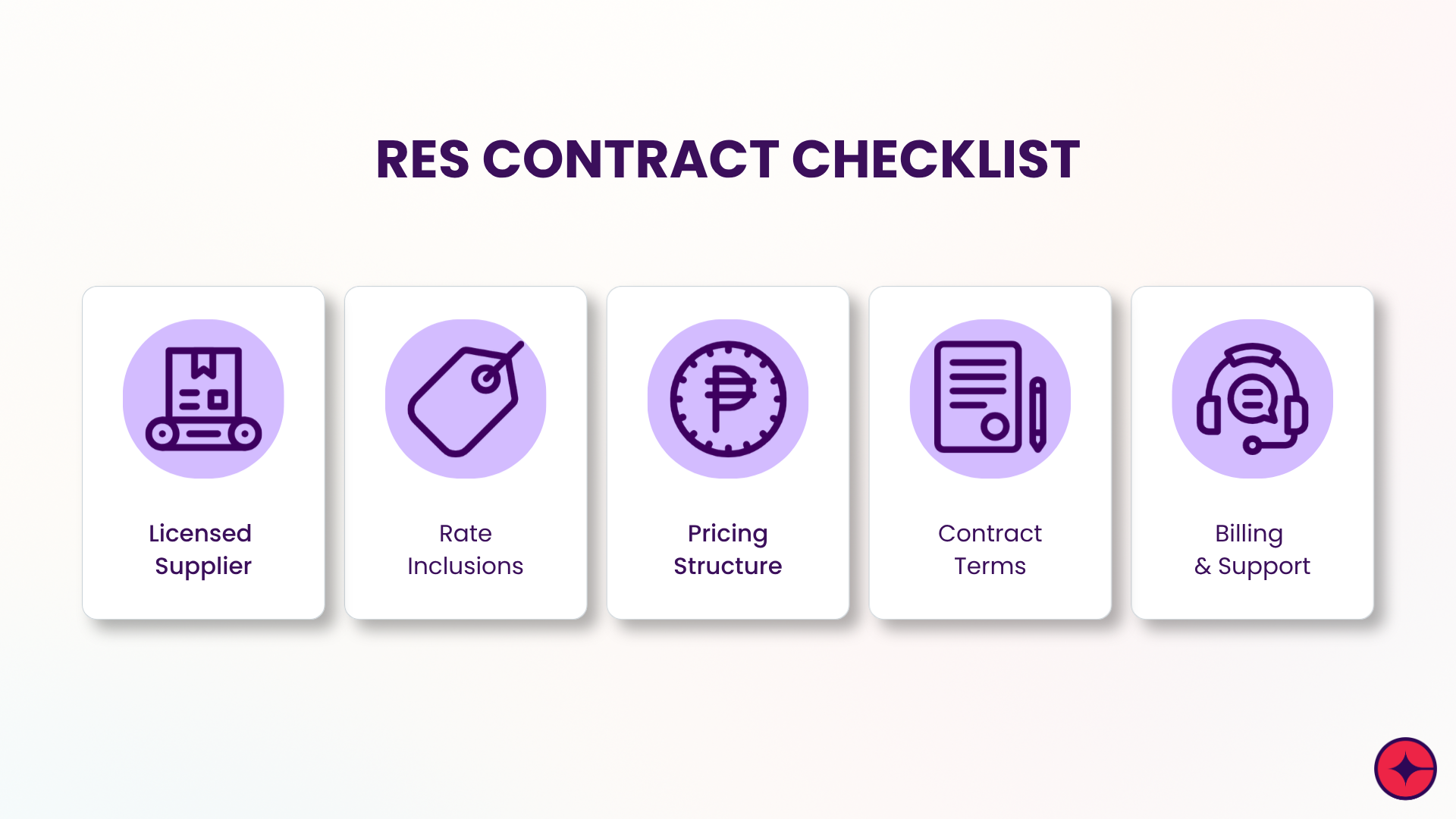
But the lowest-looking rate is not always the lowest-cost contract. For commercial and industrial businesses, the better question is: What will this agreement actually cost, how will it behave over time, and what kind of support comes with it?
That matters even more now that more businesses can participate in the competitive retail market. Since June 26, 2026, the RCOA and Retail Aggregation Program threshold has been lowered to 100 kW average monthly peak demand, expanding the number of customers that can choose a supplier.
The Energy Regulatory Commission’s announcement provides more detail on the expanded threshold. If you are evaluating a retail electricity supplier in the Philippines, use this checklist before signing anything.
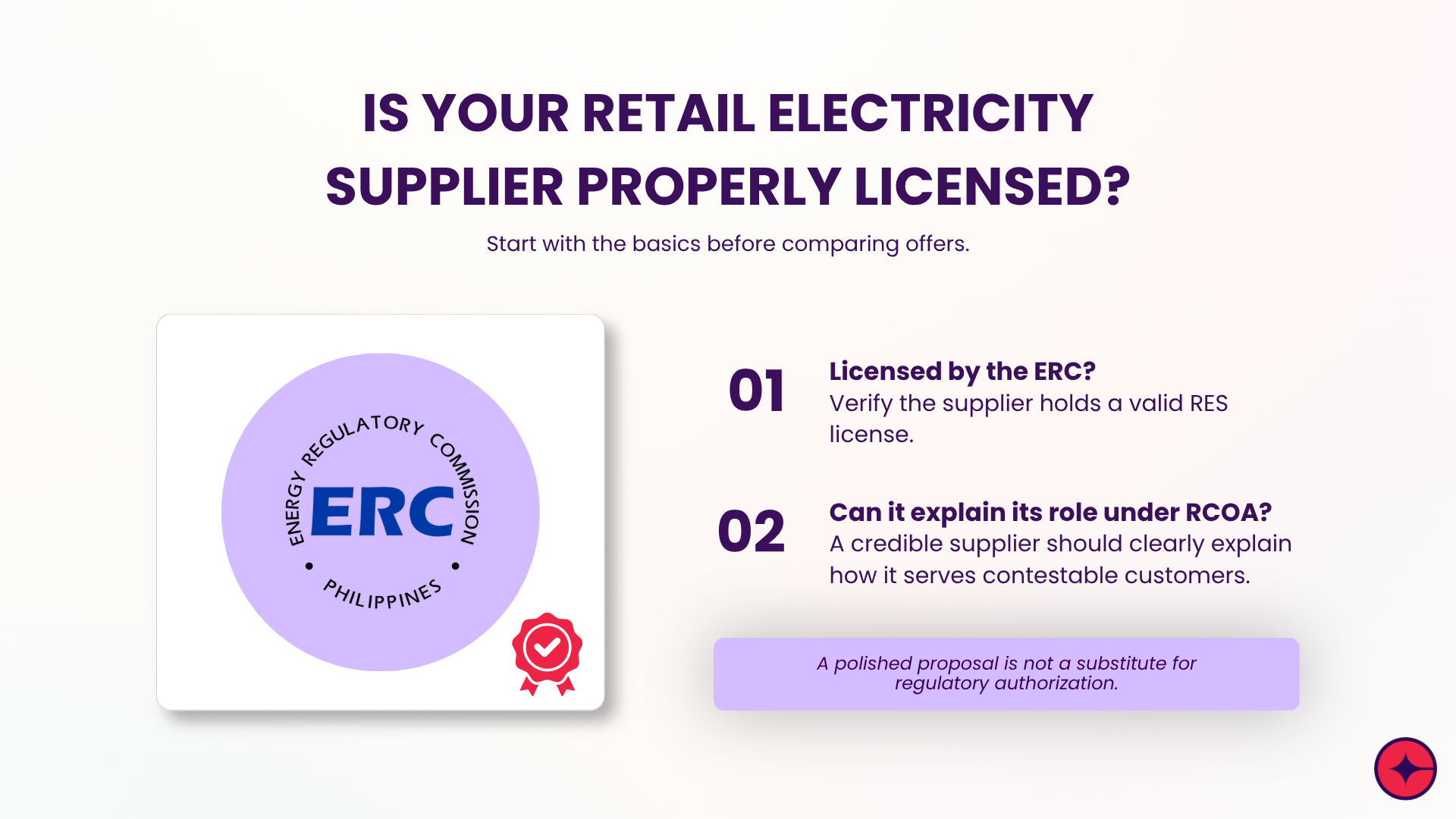
Start with the basic question: Is the supplier authorized to serve contestable customers?
Retail Electricity Suppliers serving the contestable market are required to hold an ERC license. Before comparing commercial offers, verify that the supplier is properly licensed. The ERC’s Supply Sector resources provide information on RES regulation and licensing.
This is a useful first filter when comparing energy companies in the Philippines. A polished proposal is not a substitute for regulatory authorization.
Check:
One of the most important questions is also one of the easiest to overlook: How is the quoted electricity price actually calculated?
Retail contracts can be structured in different ways. Some prioritize price stability through fixed arrangements. Others may be linked partly or fully to market prices, including the Wholesale Electricity Spot Market or WESM. There may also be time-of-use or customized structures designed around a business’s operating pattern.
None is automatically “best.” The right structure depends on your load profile, budget priorities, and appetite for market price movements.
Check:
This is where comparing proposals becomes much more meaningful. Electricity bills contain several cost components, and not every item is controlled by the supplier.
Generation, transmission, distribution-related charges, taxes, and other regulated or pass-through items may affect the final amount payable. Electricity rates are unbundled so customers can see the different components that make up their bill.
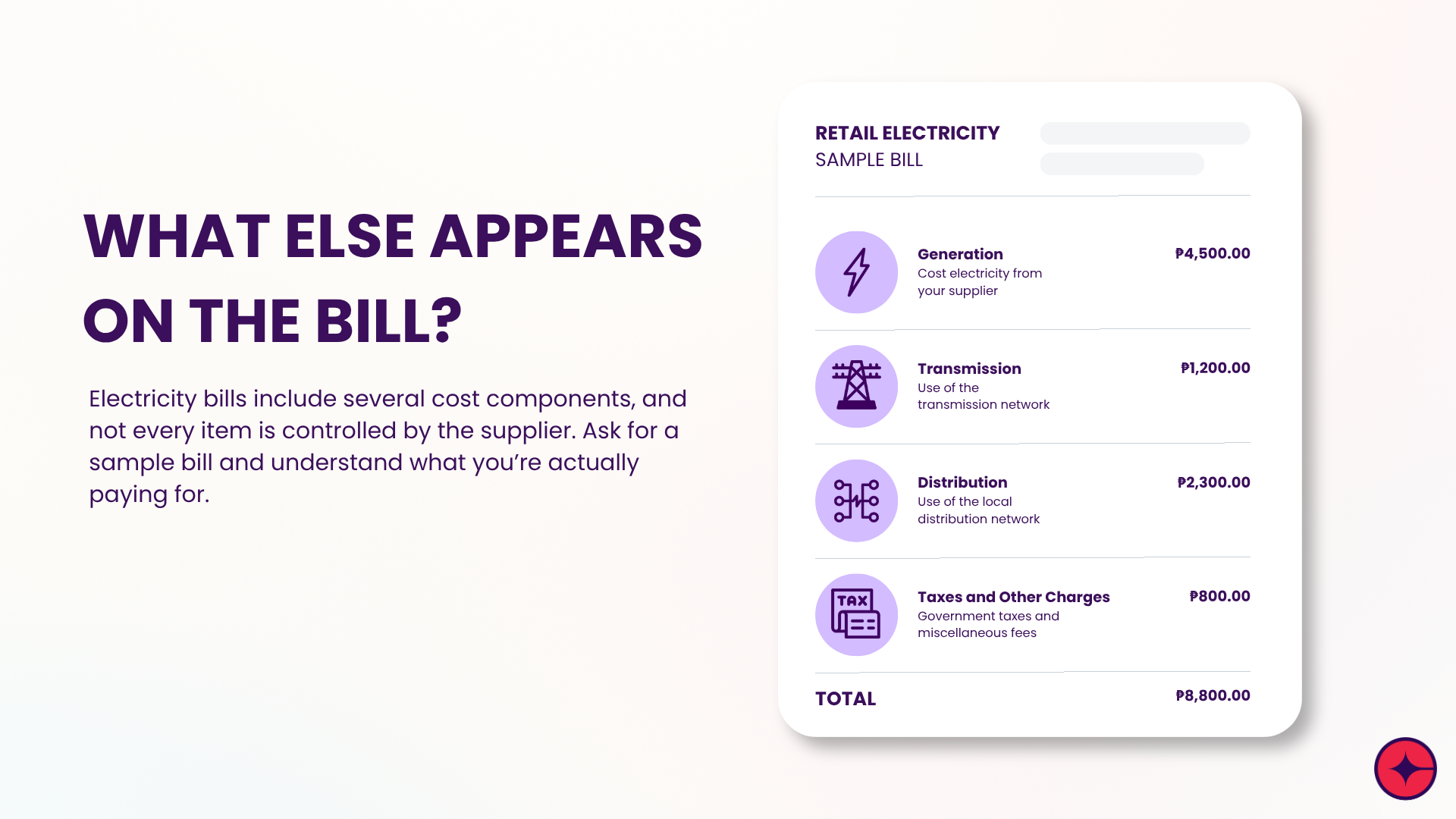
So when comparing electricity suppliers, do not stop at the advertised rate. Ask each supplier to walk you through a sample bill and identify every line item that affects the total price you pay.
The goal is to compare contracts on the amount you are actually likely to pay, not simply the most attractive number on the first page of a proposal.
Check:
A good rate can become less attractive if the contract term does not match your business plans.
Review the length of the agreement, start and end dates, renewal provisions, early termination terms, and any conditions tied to changes in consumption.
A manufacturer adding production capacity may have different needs from a hotel expecting stable operations for the next few years. Your electricity contract should fit the way the business is likely to evolve.
Check:
Predictable pricing is useful only if the billing itself is easy to understand. Ask when invoices are issued, how much time you have to pay, how billing adjustments are handled, and whether any security deposit or credit support is required.
A transparent energy provider should be able to explain the process in plain language.
Check:
Switching electricity supplier in the Philippines involves more than signing a retail supply contract. Customer switching operates within the retail market’s registration and switching framework, with the supplier submitting requirements through the Central Registration Body and coordinating with relevant industry participants.
The important question is not whether paperwork exists. It does. The question is how much of it your supplier will help manage.
A good supplier should give you a clear timeline, explain what your team needs to provide, and keep the process moving. Businesses that want to understand the formal framework can also refer to the WESM Retail Rules.
Check:
The relationship should not become quieter the moment the contract takes effect. Electricity is an ongoing operating cost, and questions will come up.
You may need clarification on a bill, help understanding unusual consumption, support for another site, or advice when operations change. Before choosing a retail electricity supplier, find out what support exists after onboarding.
Check:
Some of the best information comes before you sign. Pay attention to how a potential supplier handles difficult questions.
Do they explain the assumptions behind their proposal? Do they answer questions about fees directly? Can they show where market exposure sits in the contract? Do they follow up when they say they will?
Responsiveness during the sales process is not a guarantee of future service, but it is a useful signal.
When choosing among power companies in the Philippines, look for a supplier willing to make the contract understandable rather than asking you to trust the headline rate.
A practical final test is to step away from the proposal and ask:
If any answer is unclear, keep asking questions.
Choosing a retail electricity supplier is not just a procurement exercise. It is a decision about cost visibility, operational support, and how much control your business has over one of its recurring expenses.
COREnergy Philippines works with commercial and industrial customers through flexible electricity arrangements, straightforward contract discussions, and hands-on support throughout the switching process.
If you are exploring how to switch retail electricity suppliers in the Philippines, review the contract as carefully as you would any other major business agreement.
The right electricity supplier should not only offer a competitive price. It should make you confident about what you are signing, what you will pay, and who will be there when you need help.