
If you’ve ever looked at your monthly power bill and thought, “Is this really my only option?”, you’re not alone.

Under Retail Competition and Open Access (RCOA) in the Philippines, certain businesses can choose a retail electricity supplier instead of buying power from their local distribution utility's default setup. Those eligible businesses belong to what’s called the contestable market.
This guide explains what the contestable market is, who qualifies, what changes (and what doesn’t), and how to switch, minus the industry alphabet soup.
Think of the electricity setup as two lanes:
RCOA is anchored in the Electric Power Industry Reform Act (EPIRA), which provides the framework for retail competition and customer choice.
Eligibility isn’t self-declared. Sadly, you can’t just decide contestability. The Energy Regulatory Commission (ERC) sets and certifies contestability requirements, while RCOA operates within the broader market rules and switching processes managed by the retail market institutions.
Generally, the main requirement to qualify for the contestable market has been meeting a minimum average monthly peak demand over a defined period, commonly assessed over the preceding 12 months.
As of the latest public announcements, the ERC approved lowering the eligibility threshold for RCOA and the Retail Aggregation Program from 500 kW to 100 kW, with implementation set to take effect on June 26, 2026.
This is where many businesses get stuck.
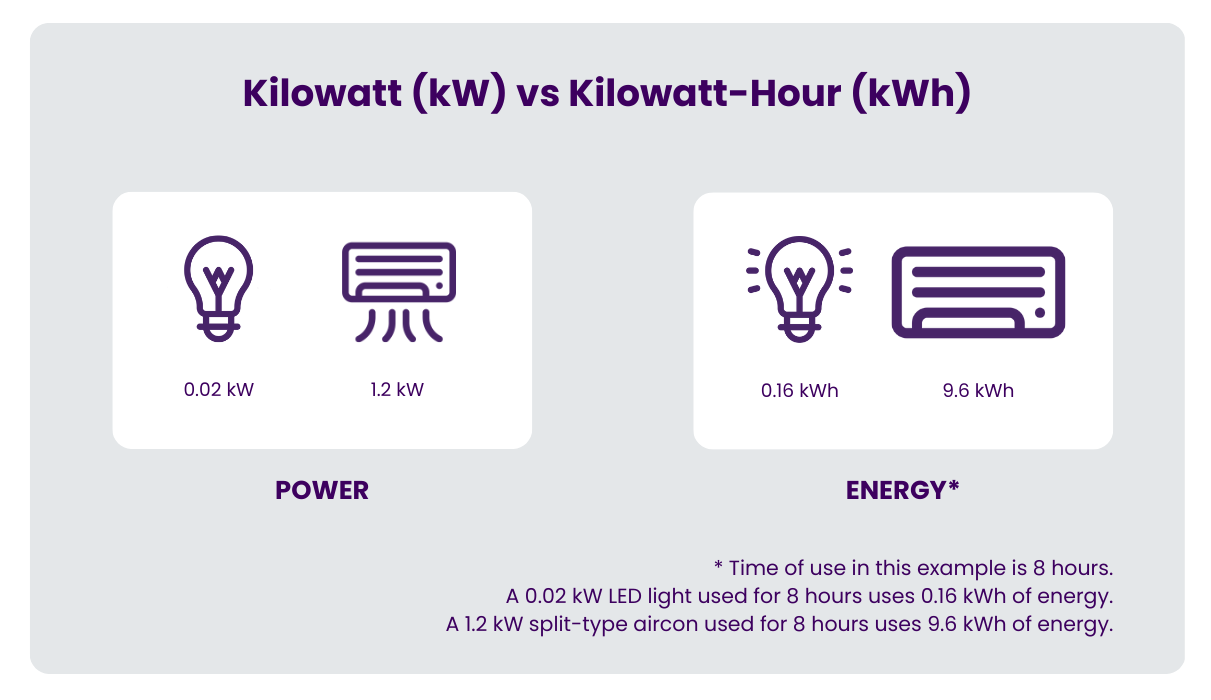
Contestability is typically based on peak demand (kW), not just total usage (kWh). Your bill or your distribution utility can usually provide this demand history.
If one facility meets the required average monthly peak demand threshold, it may qualify for RCOA switching on its own.
If you have multiple sites (or eligible end-users that can be grouped under program rules), aggregation can allow combined demand to reach the threshold and participate as a group.
Here’s the reassuring part:
After all, that’s the heart of RCOA in the Philippines: customer choice.
Yes, reducing costs matters. But many businesses also switch because they want:
In other words: not just savings, but control and fewer surprises.

This is also where providers like COREnergy Philippines position themselves: as a customer-first retail electricity supplier built for businesses that want a clearer, more guided experience through RCOA.
While details can vary by situation, the switching journey generally looks like this:
If you want a shortcut, a supplier can typically help you validate eligibility, interpret your demand data, and guide documentation, so your team isn’t stuck playing compliance detective.
Outages and network issues are still tied to the local distribution network. What does change is your supply contract and supplier support around your account.
It used to skew that way due to higher thresholds. But with the ERC-approved move toward 100 kW eligibility effective June 26, 2026, more mid-sized enterprises will be expected to qualify.
Start with your bill data (or request demand history from your utility). The key is your average monthly peak demand, not just your total kWh.
If your business is exploring choosing a retail electricity supplier under RCOA in the Philippines, the best first step is simple: confirm whether you’re contestable (or soon-to-be contestable) based on your demand profile, then compare supply options that fit how your operations actually run.
If you qualify for the contestable market, who you choose as your Retail Electricity Supplier matters just as much as the rate. COREnergy stands out as a RES partner because we make the switch feel less like paperwork and more like progress, guiding you through the requirements, timelines, and coordination steps with clear, upfront communication.
You get responsive, customer-first support, transparent explanations of your options, and a plan structure that fits how your business actually operates. In short: fewer surprises, more clarity, and a partner that stays with you before, during, and after the switch.