
Switching to a Retail Electricity Supplier under Retail Competition and Open Access (RCOA) in the Philippines is not complicated, but it is document-driven. The fastest switches happen when the customer knows two things early: what requirements are needed, and which party issues each document.
This guide is a practical checklist you can hand to your finance, facilities, and admin teams. It focuses on the most common requirements for switching from the captive market to the contestable market, plus where to source each item.
A quick reminder before we start: under RCOA, you are changing your supply arrangement, not the physical wires. Your Distribution Utility (DU) still delivers electricity to your facility. Your chosen retail electricity supplier handles your retail supply contract, onboarding support, and ongoing account care.
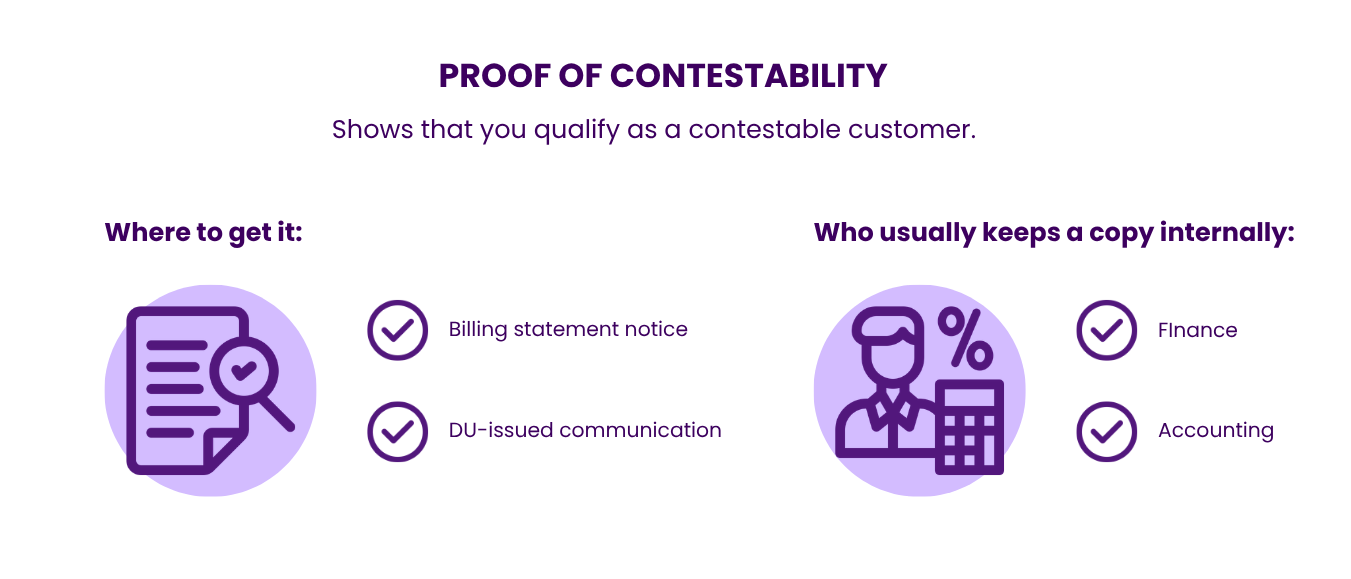
Some DUs issue a notification or use your billing statement as proof that you qualify as a contestable customer.
Where to get it: From your DU (often through a billing statement notice or DU-issued communication)
Who usually keeps a copy internally: Finance or Accounting
The Core Switching Documents and Where to Get Each One
Below are the most common requirements referenced in DU switching guides and RCOA onboarding timelines.
This is the primary contract between your business and the Retail Electricity Supplier. It defines the commercial terms, billing option, effective date, and other conditions of your supply arrangement.
Where to get it: From your chosen RES (they draft and finalize it with you)
What you need internally:
DUs typically require advance notice before the switch takes effect. Some RES remind contestable customers to advise the DU on the planned switch at least 60 days prior to the effectiveness of the Retail Supply Contract.
Where to get it:
Who should own it internally: Facilities or Energy Manager, with Finance copied
Switching is recorded through the market registration process. Certain checklist requirements go to the CRB via the RES or Supplier of Last Resort, and point customers to IEMOP’s retail registration forms and templates page for checklists and forms.
Where to get it
What you usually provide
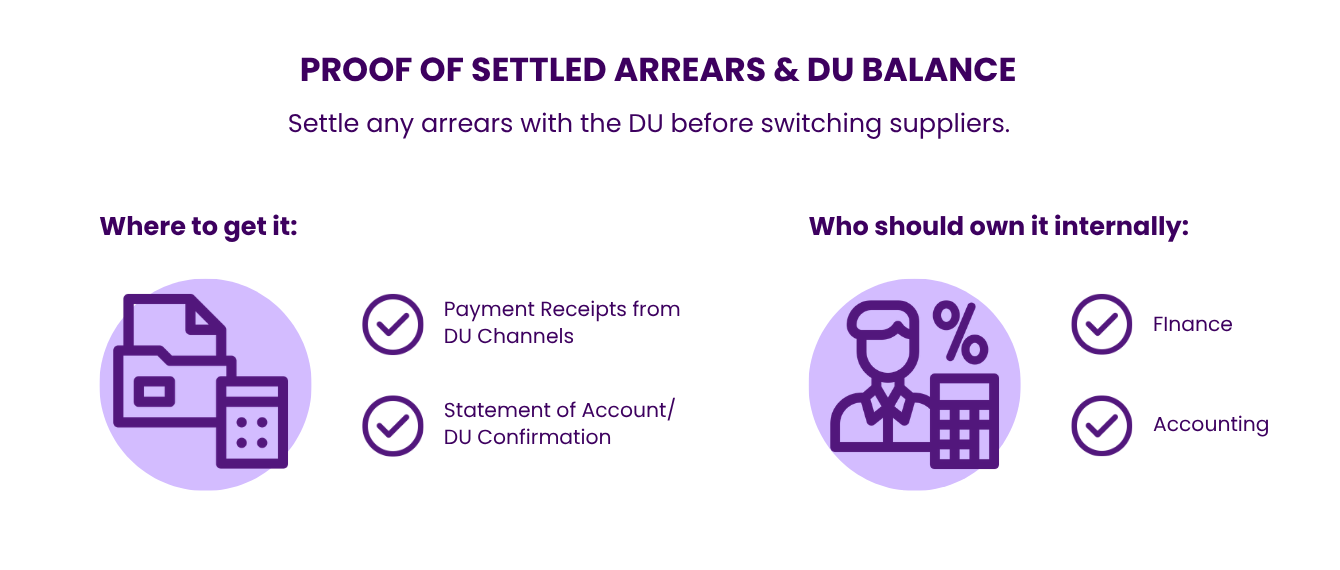
If you are moving from captive to contestable, many switching protocols require that any arrears with the DU be settled before the switch. Some RES explicitly call out the settlement of all arrears with the DU before the switch.
Where to get it
Who should own it internally: Finance or Accounting
RCOA switching assumes a compliant metering setup. RCOA-compliant installed meters may be part of what the customer provides to the DU and include submission of a signed Meter Installation Registration Form to the supplier within the switch timeline.
Where to get it
Who should own it internally: Facilities or Engineering, with the RES copied
Your billing option affects your paperwork. Under dual billing for some RES, customers may need to execute a Distribution Wheeling Services Agreement and complete DU deposit requirements.
Where to get it: From your DU (agreement template and instructions)
What to plan for
Deposits depend on your DU and billing arrangement. The required Distribution Wheeling Services deposit should be settled before the switch and deposit requirements in related switching scenarios.
Where to get it
Who should own it internally: Finance, with Facilities aware of timing
To keep things easy for internal teams, here is the sourcing logic:
From your company
From the DU
From the RES
This division of responsibility aligns with the switching timeline and requirements outlined in DU RCOA materials.
If your agreement set includes notarized documents (common for DU agreements), schedule notarization early and confirm signatory availability.
Settlement proof is often a hard prerequisite. Clear any open items with the DU before locking your target switch date.
Metering requirements can take time. Align early with the DU and your RES so the metering setup supports the contestable arrangement.
If you are learning how to switch retail electricity suppliers in the Philippines, document readiness is where most teams either move fast or get stuck. COREnergy supports customers by turning requirements into a clear checklist, guiding your team on what to secure from the DU, and organizing the switching steps so internal workload stays manageable.
If you want a smoother path from eligibility confirmation to signed contracts to complete submissions, COREnergy can walk you through the document set and the process in plain language, with transparency on timelines and responsibilities at every step.