
An electricity rate plan should fit the way your business operates, not force your operations to fit the plan.
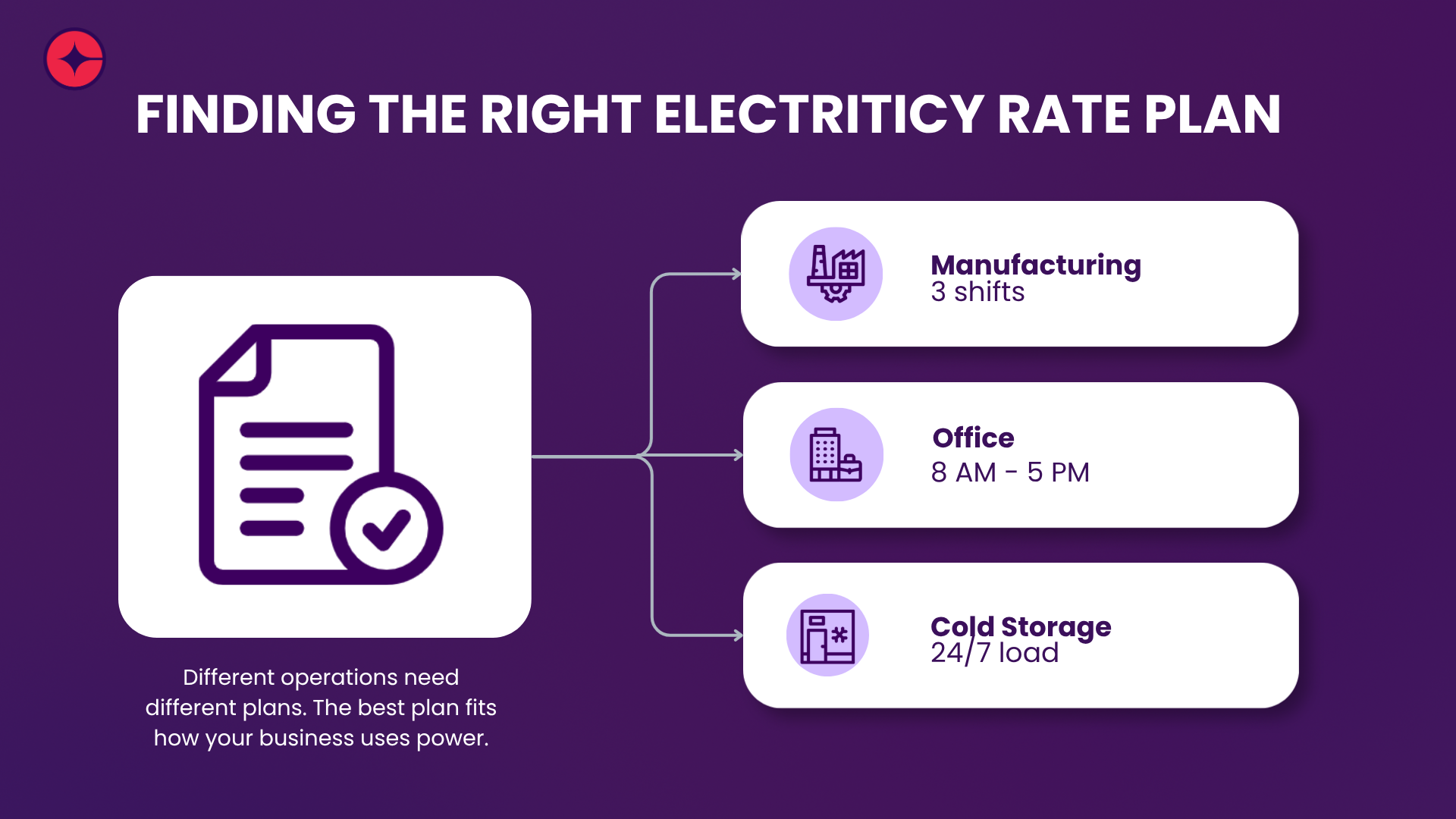
A manufacturing facility running three shifts has very different energy needs from an office building that is busiest from 8 AM to 5 PM.
A cold-storage facility may need steady power around the clock, while another business may be able to move energy-intensive activities to quieter hours.
Even two companies using roughly the same amount of electricity can have very different priorities when it comes to price stability and market exposure.
That is why COREnergy Philippines looks beyond monthly consumption when helping commercial and industrial customers choose an electricity plan.
As a retail electricity supplier in the Philippines, COREnergy considers how and when a business consumes power, how comfortable it is with changing market prices, and what it wants to achieve over the life of the contract.
The goal is straightforward: find a rate structure that makes sense for the business behind the meter.
Before discussing rates, it helps to understand the operation itself.
How much electricity does the facility typically consume? When does demand rise? Are there noticeable daytime or nighttime peaks? Does production stay relatively consistent, or does usage change significantly throughout the week or year?
This creates what is commonly called a load profile: a picture of how electricity use changes over time.
For example, a school, office, or daytime manufacturing operation may concentrate most of its consumption during working hours. A hotel, hospital, cold-storage facility, or 24-hour production plant may have a much more continuous load.
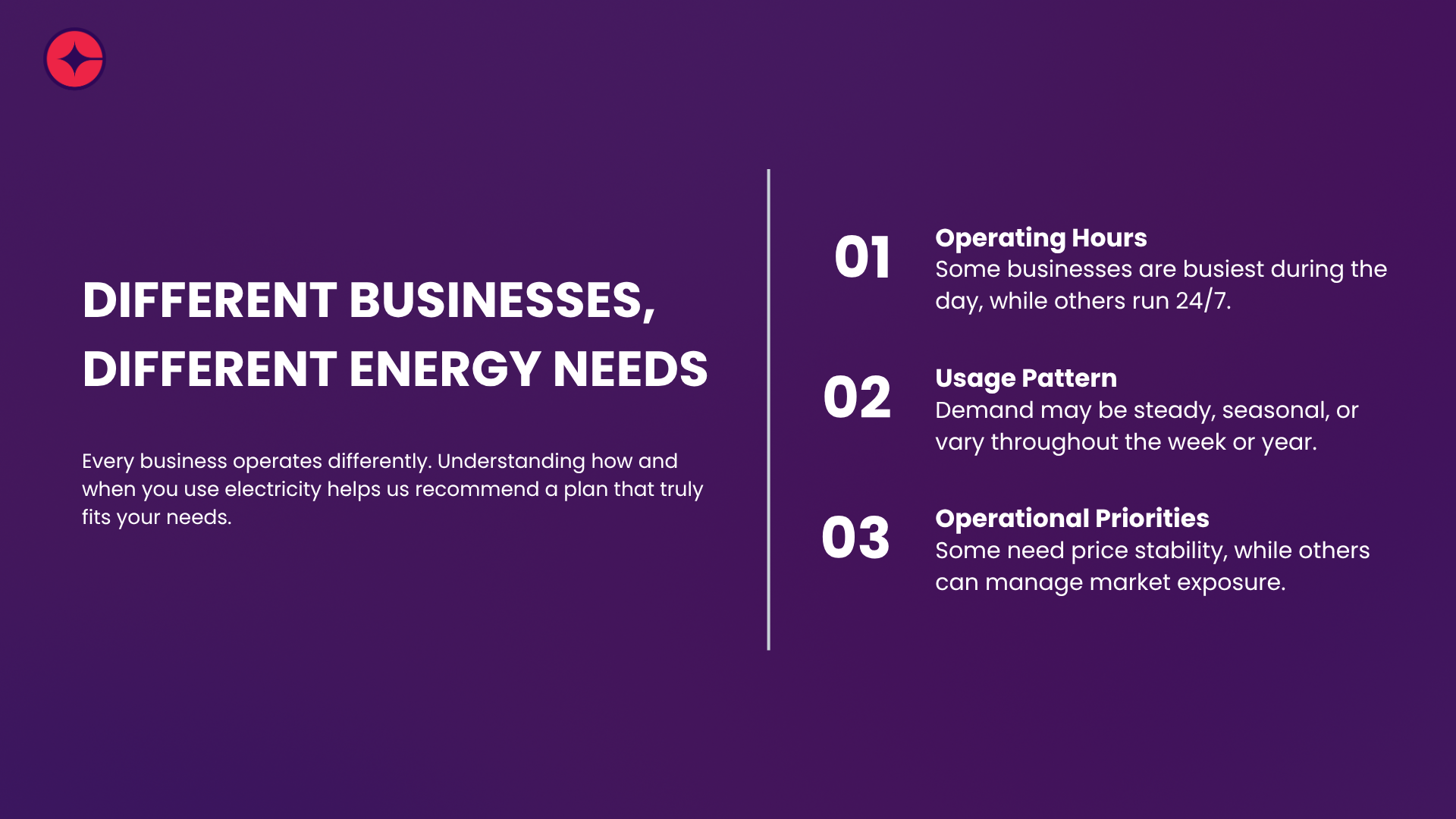
Those differences matter because the same electricity rate structure will not necessarily produce the same result for both customers.
COREnergy therefore looks at actual consumption patterns rather than simply recommending one standard plan to every business. Its current energy plan portfolio includes fixed, time-based, market-linked, and customized structures designed for different operating profiles.
Once the consumption pattern is clear, operating hours become particularly important. Take a company that uses most of its electricity during regular daytime hours.
COREnergy's Sunshine Plan locks in a rate during solar hours while using spot pricing outside that window. It is designed for businesses such as offices, schools, and manufacturers whose larger loads occur during the day.
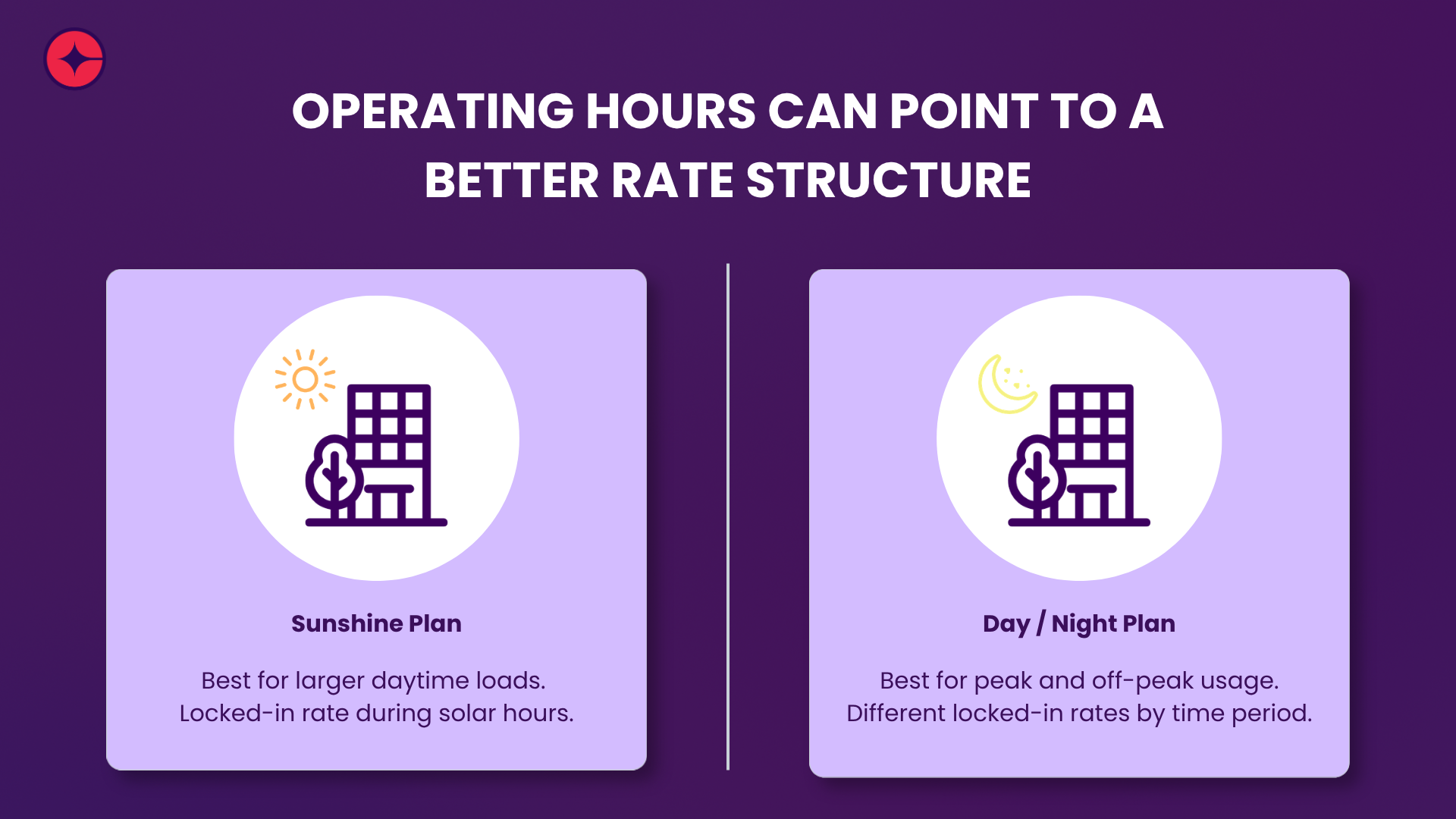
Other businesses may have more flexibility around when they consume electricity. COREnergy's Day / Night Plan applies different locked-in rates during peak and off-peak periods.
For businesses that can move selected production processes, charging, pumping, cooling, or other loads into off-peak hours, the timing of consumption can become part of the cost-management strategy.
The point is not simply to choose the most complicated plan available. It is to choose one that reflects what your operations can realistically do.
If shifting electricity use would disrupt production or customer service, a time-based rate may not make sense. If your schedule is flexible, however, that flexibility may be worth using.
Another important question has less to do with machinery and more to do with management: How comfortable is your business with electricity prices changing?
Some finance teams want a high degree of predictability. They would rather know their electricity rate in advance so they can budget confidently, even if market prices occasionally move lower.
For these businesses, COREnergy's Fixed and Flat Rate provides a locked-in electricity rate for the contract period, entirely reducing exposure to spot-market price movements.
Other businesses may be prepared to accept more market exposure risk in exchange for the opportunity to benefit when market prices are favorable.
COREnergy's WESM Plus follows prices in the Wholesale Electricity Spot Market. The Philippine Electricity Market Corporation explains that WESM prices are driven by electricity demand and available supply, which means prices can move in either direction as market conditions change.
That makes risk appetite an important part of choosing a retail electricity supplier and rate plan. What looks attractive during a low-price period may feel very different during a market spike. A good plan should reflect how much volatility your business is actually prepared to carry.
Electricity planning should not stop at today's bill. Perhaps your company expects to open another facility next year. Production capacity may be increasing.
Operating hours could change. You may be investing in energy storage, replacing equipment, or looking for more predictable overhead as the business expands. These plans can affect what type of electricity contract makes sense.
COREnergy also offers customized rate structures that can combine elements such as fixed pricing, WESM exposure, time-of-use schedules, and price caps.
These arrangements are intended for businesses with specific operational patterns and enough consumption data to build a more tailored approach.
Instead of asking only, “What rate is cheapest today?”, it can be more useful to ask: What rate structure will support the way our business expects to operate over the contract period?
That is a much stronger foundation for a long-term electricity decision.
A business can have a suitable electricity contract and still be using more energy than it needs. That is where the conversation can expand beyond supply.
COREnergy provides energy services including power-quality studies, thermal scanning, medium-voltage electrical equipment testing, energy monitoring, and Energy Audit Levels 1, 2, and 3. An energy audit, for example, can help identify areas where electricity is being wasted or equipment is operating inefficiently.
Energy-efficiency requirements for designated establishments in the Philippines are governed under Republic Act No. 11285, with compliance guidance provided by the Department of Energy.
This distinction matters. Sometimes the opportunity is in the rate. Sometimes it is in how the facility consumes electricity. Often, it is a little of both.
The question of finding the right plan is becoming relevant to a wider group of Philippine businesses. Effective June 26, 2026, the Energy Regulatory Commission lowered the eligibility threshold for RCOA and the Retail Aggregation Program to 100 kW average monthly peak demand.
This allows more eligible businesses to choose their own electricity supplier rather than remaining solely under the traditional captive supply arrangement. The ERC's announcement on the expanded threshold and the Department of Energy's guidance on expanded consumer choice provide further information.
For companies considering switching electricity supplier in the Philippines, that choice creates an opportunity to think more strategically about electricity for business.
It is no longer simply a matter of asking which energy companies in the Philippines or power companies in the Philippines can offer a rate. It is about finding an energy provider that understands what sits behind that rate.
There is no universal "best electricity rate." There is only a rate that is better suited to your consumption pattern, operating schedule, risk appetite, budget priorities, and future plans.
That is the approach COREnergy takes when working with customers: understand the business first, then find the electricity arrangement that fits it.
If you are exploring how to switch retail electricity supplier in the Philippines, start with your recent electricity data and the way your operations actually run.
From there, COREnergy can help you compare your options, understand the trade-offs, and choose a plan with greater confidence. The best electricity plan should not just look good on a proposal; it should work for your business.